BLOOD BROTHERS
The Narrator
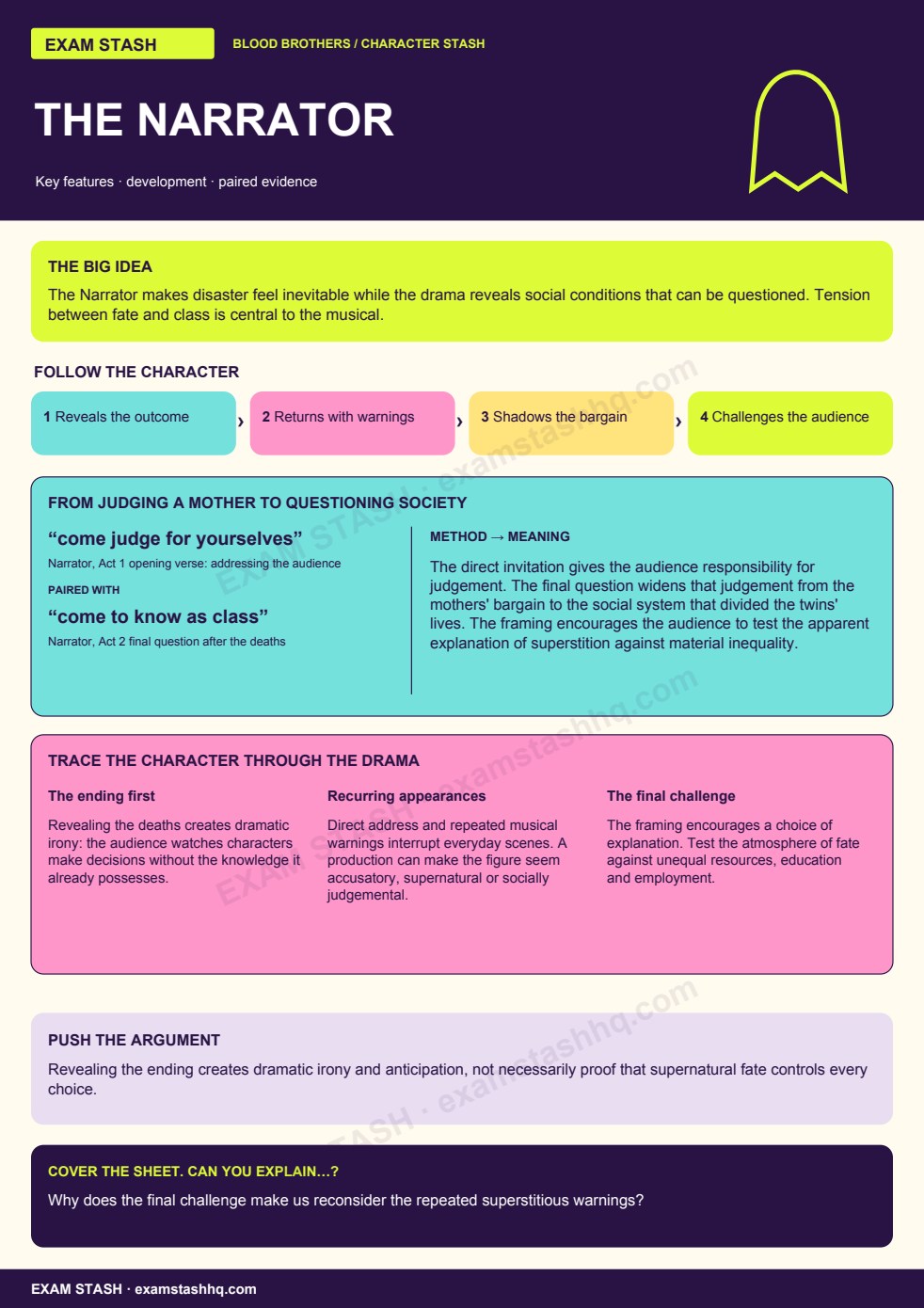
The Narrator makes disaster feel inevitable while the drama reveals social conditions that can be questioned. Tension between fate and class is central to the musical.
Read the accessible text and study notes
The Narrator
The Narrator makes disaster feel inevitable while the drama reveals social conditions that can be questioned. Tension between fate and class is central to the musical.
Reveals the outcome → Returns with warnings → Shadows the bargain → Challenges the audience
From judging a mother to questioning society
“come judge for yourselves” — Narrator, Act 1 opening verse: addressing the audience
paired with “come to know as class” — Narrator, Act 2 final question after the deaths
The direct invitation gives the audience responsibility for judgement. The final question widens that judgement from the mothers' bargain to the social system that divided the twins' lives. The framing encourages the audience to test the apparent explanation of superstition against material inequality.
Push the argument
Revealing the ending creates dramatic irony and anticipation, not necessarily proof that supernatural fate controls every choice.
Recall
Why does the final challenge make us reconsider the repeated superstitious warnings?
Trace the drama
The ending first
Revealing the deaths creates dramatic irony: the audience watches characters make decisions without the knowledge it already possesses.
Recurring appearances
Direct address and repeated musical warnings interrupt everyday scenes. A production can make the figure seem accusatory, supernatural or socially judgemental.
The final challenge
The framing encourages a choice of explanation. Test the atmosphere of fate against unequal resources, education and employment.
Evidence sources
- Author's own website reproduces the Narrator's opening verse
- School-hosted study resource reproduces the Narrator's final question; secondary corroboration
Willy Russell: Blood Brothers. Scene locations are used because page numbers vary by edition.