BLOOD BROTHERS
Sammy Johnstone
Sammy connects early intimidation to adult criminal violence. His influence gives the idea of a role model a darker form than Edward’s friendship.
Read the accessible text and study notes
Sammy Johnstone
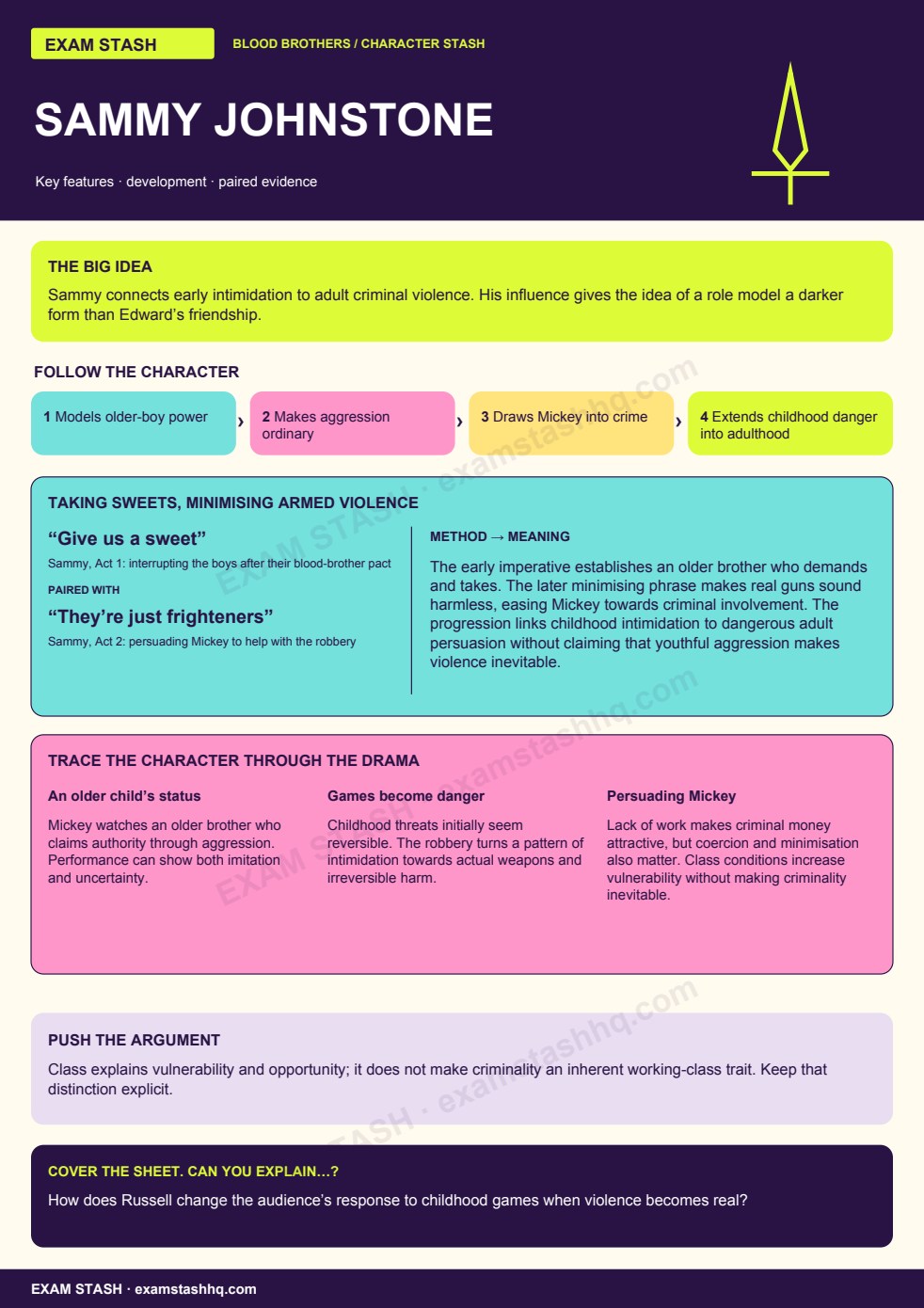
Sammy connects early intimidation to adult criminal violence. His influence gives the idea of a role model a darker form than Edward’s friendship.
Models older-boy power → Makes aggression ordinary → Draws Mickey into crime → Extends childhood danger into adulthood
Taking sweets, minimising armed violence
“Give us a sweet” — Sammy, Act 1: interrupting the boys after their blood-brother pact
paired with “They’re just frighteners” — Sammy, Act 2: persuading Mickey to help with the robbery
The early imperative establishes an older brother who demands and takes. The later minimising phrase makes real guns sound harmless, easing Mickey towards criminal involvement. The progression links childhood intimidation to dangerous adult persuasion without claiming that youthful aggression makes violence inevitable.
Push the argument
Class explains vulnerability and opportunity; it does not make criminality an inherent working-class trait. Keep that distinction explicit.
Recall
How does Russell change the audience’s response to childhood games when violence becomes real?
Trace the drama
An older child’s status
Mickey watches an older brother who claims authority through aggression. Performance can show both imitation and uncertainty.
Games become danger
Childhood threats initially seem reversible. The robbery turns a pattern of intimidation towards actual weapons and irreversible harm.
Persuading Mickey
Lack of work makes criminal money attractive, but coercion and minimisation also matter. Class conditions increase vulnerability without making criminality inevitable.
Evidence sources
Willy Russell: Blood Brothers. Scene locations are used because page numbers vary by edition.