BLOOD BROTHERS
Mrs Johnstone
Mrs Johnstone’s decision emerges from poverty and unequal bargaining power. The musical gives emotional force to both her constrained choices and her enduring attachment.
Read the accessible text and study notes
Mrs Johnstone
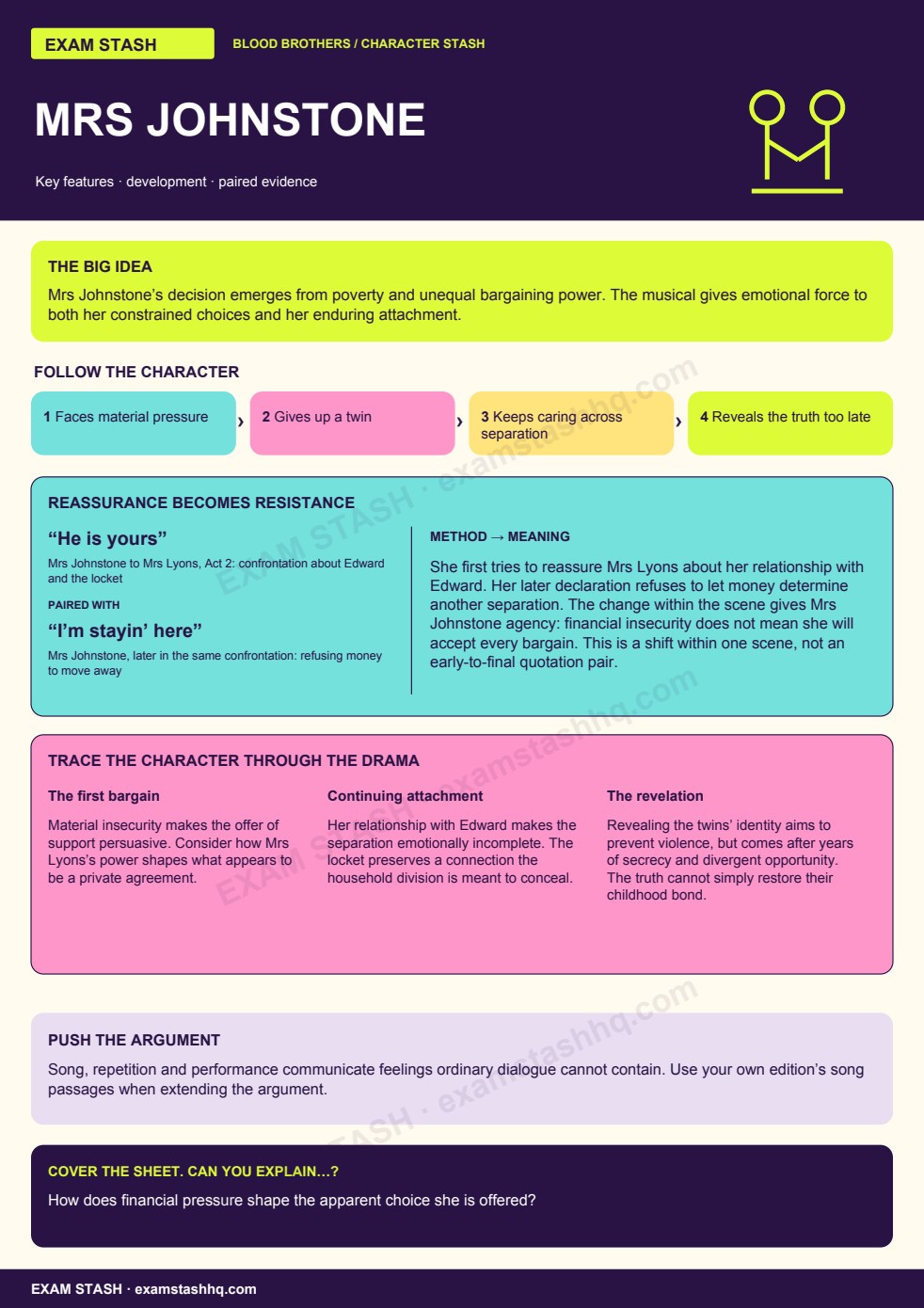
Mrs Johnstone’s decision emerges from poverty and unequal bargaining power. The musical gives emotional force to both her constrained choices and her enduring attachment.
Faces material pressure → Gives up a twin → Keeps caring across separation → Reveals the truth too late
Reassurance becomes resistance
“He is yours” — Mrs Johnstone to Mrs Lyons, Act 2: confrontation about Edward and the locket
paired with “I’m stayin’ here” — Mrs Johnstone, later in the same confrontation: refusing money to move away
She first tries to reassure Mrs Lyons about her relationship with Edward. Her later declaration refuses to let money determine another separation. The change within the scene gives Mrs Johnstone agency: financial insecurity does not mean she will accept every bargain. This is a shift within one scene, not an early-to-final quotation pair.
Push the argument
Song, repetition and performance communicate feelings ordinary dialogue cannot contain. Use your own edition’s song passages when extending the argument.
Recall
How does financial pressure shape the apparent choice she is offered?
Trace the drama
The first bargain
Material insecurity makes the offer of support persuasive. Consider how Mrs Lyons’s power shapes what appears to be a private agreement.
Continuing attachment
Her relationship with Edward makes the separation emotionally incomplete. The locket preserves a connection the household division is meant to conceal.
The revelation
Revealing the twins’ identity aims to prevent violence, but comes after years of secrecy and divergent opportunity. The truth cannot simply restore their childhood bond.
Evidence sources
Willy Russell: Blood Brothers. Scene locations are used because page numbers vary by edition.