MACBETH · CHARACTER STUDY · ACT 1
Macbeth — Act 1
Loyalty, temptation and choice: six key quotations, scene-by-scene development and close analysis.
Read the Act 1 study notes
How Macbeth develops in Act 1
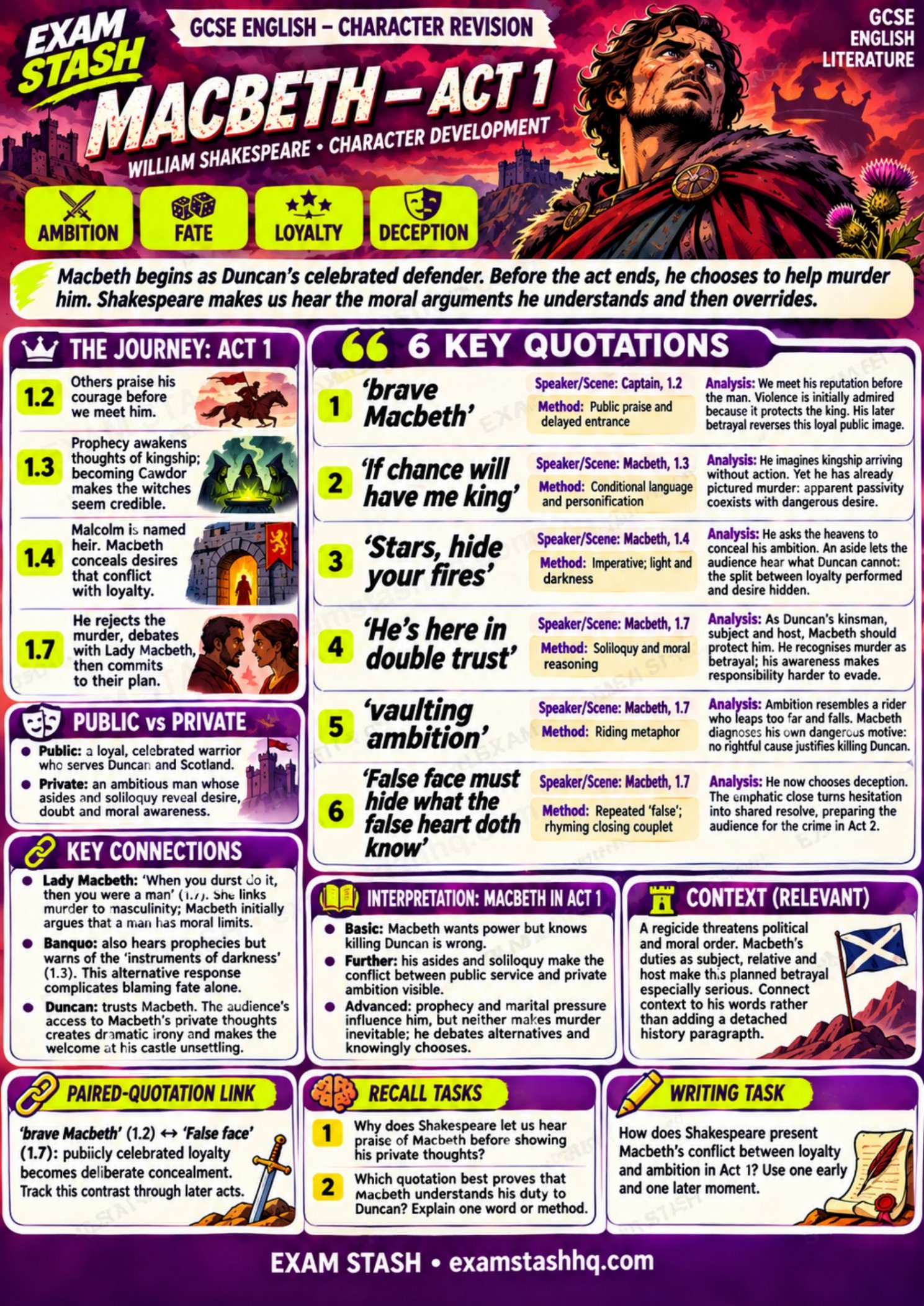
Macbeth begins as Duncan’s celebrated defender. Before the act ends, he chooses to help murder him. Shakespeare makes us hear the moral arguments he understands and then overrides.
- 1.2: Others praise his courage before we meet him.
- 1.3: Prophecy awakens thoughts of kingship; becoming Cawdor makes the witches seem credible.
- 1.4: Malcolm is named heir. Macbeth conceals desires that conflict with loyalty.
- 1.7: He rejects the murder, debates with Lady Macbeth, then commits to their plan.
Six key quotations
“brave Macbeth”
Captain, 1.2 · Public praise and delayed entrance
We meet his reputation before the man. Violence is initially admired because it protects the king. His later betrayal reverses this loyal public image.
“If chance will have me king”
Macbeth, 1.3 · Conditional language and personification
He imagines kingship arriving without action. Yet he has already pictured murder: apparent passivity coexists with dangerous desire.
“Stars, hide your fires”
Macbeth, 1.4 · Imperative; light and darkness
He asks the heavens to conceal his ambition. An aside lets the audience hear what Duncan cannot: the split between loyalty performed and desire hidden.
“He’s here in double trust”
Macbeth, 1.7 · Soliloquy and moral reasoning
As Duncan’s kinsman, subject and host, Macbeth should protect him. He recognises murder as betrayal; his awareness makes responsibility harder to evade.
“vaulting ambition”
Macbeth, 1.7 · Riding metaphor
Ambition resembles a rider who leaps too far and falls. Macbeth diagnoses his own dangerous motive: no rightful cause justifies killing Duncan.
“False face must hide what the false heart doth know”
Macbeth, 1.7 · Repeated ‘false’; rhyming closing couplet
He now chooses deception. The emphatic close turns hesitation into shared resolve, preparing the audience for the crime in Act 2.
Connections to other characters
Lady Macbeth: ‘When you durst do it, then you were a man’ (1.7). She links murder to masculinity; Macbeth initially argues that a man has moral limits.
Banquo also hears prophecies but warns of the ‘instruments of darkness’ (1.3). This alternative response complicates blaming fate alone.
Duncan trusts Macbeth. The audience’s access to Macbeth’s private thoughts creates dramatic irony and makes the welcome at his castle unsettling.
Develop the interpretation
Basic: Macbeth wants power but knows killing Duncan is wrong. Further: his asides and soliloquy make the conflict between public service and private ambition visible. Advanced: prophecy and marital pressure influence him, but neither makes murder inevitable; he debates alternatives and knowingly chooses.
Pair the evidence
‘brave Macbeth’ (1.2) ↔ ‘False face’ (1.7): publicly celebrated loyalty becomes deliberate concealment. Track this contrast through later acts.
Context
A regicide threatens political and moral order. Macbeth’s duties as subject, relative and host make this planned betrayal especially serious. Connect context to his words rather than adding a detached history paragraph.
Recall
- Why does Shakespeare let us hear praise of Macbeth before showing his private thoughts?
- Which quotation best proves that Macbeth understands his duty to Duncan? Explain one word or method.
Writing task
How does Shakespeare present Macbeth’s conflict between loyalty and ambition in Act 1? Use one early and one later moment.